Showing posts with label trova. Show all posts

Monday, August 29, 2011

Bull City Leans Forward for Shana Tucker, Peter Lamb @ Casbah (8/20 Review)

Peter Lamb, Shana Tucker show
forward-leaning jazz: Peter Lamb & The Wolves

If you were at Casbah on August 20th, you know that Shana Tucker's double bill with Peter Lamb and The Wolves was remarkable. People came to this show with a certain hunger for a serious listening experience, and they got it: two of the Triangle's most innovative acoustic jazz groups, together in one night for the first time ever.

Shana Tucker 8.20.11
chambersoul: Shana Tucker Quartet

The chambersoul songstress and her cello opened, backed by Stephen Coffman (drumset), Mark Wells (piano) and Darion Alexander (acoustic bass). Shana's banter between songs, rambling, funny, and animated, brought the receptive crowd in even closer. It was a pretty ravishing set; highlights included Roberta Flack's "The First Time Ever I Saw Your Face," and Bill Withers' "Who Is (S)he and what Is (S)he To You?" both of which featured strong interplay (musical and satirical) with her bass player.

Peter Lamb, Shana Tucker  show

She burned down the house, at least among all the ladies present, with a new original tune about a certain type of annoying phone call and/or text message (it may not have an official title yet, but she jokingly called it "The Booty Call Song"). Wolves Peter Lamb (sax) and Al Strong (trumpet/flugel) came out early to solo on "Bye Bye Blackbird" while Shana sang. Here's one of Shana's originals from her album Shine, a song called "November" that hits me every time:


After an intermission, Peter, Al, Mark and Stephen returned, joined by George Knott (double bass/bass saxophone) and guest Brevan Hampden (congas), to play The Wolves' set. I've never heard the horns sound better, in fact sound overall at Casbah (Sound by Evan) was peachy. If one had a request, for the artists' sake as well as the audience, it would be the installation of central A/C in this important venue. Near the stage, and especially on it, the heat from lights, etc. made for trying conditions. That said, nothing was going to stop this from being a glorious, expansive night of music. Here's "Mona Lisa," veritably busting with incredible solos by Mark Wells on piano, Peter Lamb on sax, and Al Strong with the melody on flugelhorn:


The Wolves did their usual powerranger-morphing through Astor Piazzola, Ray Charles, Nat Cole, et al. A lot of older, jazz/pop standards have cryptic Latin cover versions, or vice versa, and sitting at the bar, one popped out at me that night that, for some reason, I had never noticed before: "Boulevard of Broken Dreams" and "Veinte Años," the latter best known in a version by the Buena Vista Social Club. The former is credited to songwriters Harry Warren/Al Dubin, the latter to Maria Teresa Vera.

I'm not sure who deserves the first credit, and they differ enough past the distinctive opening bars to probably legally qualify as different songs. But my instincts lean toward Maria Teresa Vera, who was born in 1895, and wrote "Veinte Años" as a habanera (the Cuban style of contradanza, whence tango got its bassline). Nat King Cole did "Boulevard of Broken Dreams" with a Latin percussionist (Jack Costanzo), and the English lyrics not only treat a similar theme (broken dreams/long lost loves), but also mention an "old Cathedral town," which seems like an allusion to Latin America.


In any case, the really important question is this: Has anyone merged these songs? How breathtaking would that be? Wolves, you have your mission...

Danke schön, in the meantime, for restyling my brain to take in this German drinking song, "Du, Du Liegst Mir Im Herzen," sung by with Mark Wells as if he were Jeff Buckley at an Oktoberfest. This was a juicy encore:


If you missed it, you missed it.

Peter Lamb and The Wolves and Shana Tucker both have new albums; listen and learn more at their websites.

Wednesday, December 1, 2010

Trova's Redhead & The Latin Project: SATURDAY (12/4)


Olguita Morales Serrano, "La Pelirroja de la Trova"

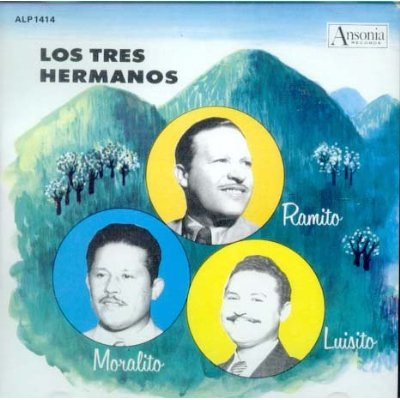
A special musical guest from Puerto Rico livens up the NC Assoc. de PR Unidos' Christmas Party this Saturday (12/4): Olguita Ramos, a direct descendent of one Puerto Rico's most esteemed musical families. Known artistically as "the redheaded troubadour" ("La Pelirroja de la Trova"), Olga is the niece of Ramito, and daughter of Luisito Morales Ramos, two of the island's most legendary singers of traditional highland poetry known as trova or música jibara.

In addition, salsa band The Latin Project, with members from The Triangle, Charlotte, and Columbia, SC, will keep the dancefloor jumping. Led by local trumpet virtuoso Alberto Carrasquillo, Latin Project is a band that we don't get to hear often enough, since their gigs tend to center in the Charlotte area.


In the holiday spirit, the PR Unidos Association is collecting donations of unwrapped toys at this event to benefit local children. Tickets are $20, available in advance online, and at the Havana Grill restaurant in Cary, and El Coqui restaurant in Holly Springs.


Olga Morales has performed extensively at festivals, private events, and on Puerto Rican radio and TV. She grew up singing with her father, Luisito, one of three musical brothers. Of the trio, Flor Morales Ramos, known simply as "Ramito," is without a doubt the island's most famous and beloved troubadour. A third brother, Juan, was known as "Moralito, and the three enjoyed solo careers as well as creating joint projects, well into their later years. Olga's father Luisito was the last survivor, until he passed away in June 2009.

Trovadores specialize in a declamatory singing style of improvised verses with strict formal rules, called décima. Its roots go back to Puerto Rico's agrarian origins, and the Andalucian farmers who settled there.

Here's Olga's father, Luisito, singing a tribute to his brother, Ramito, at a 2002 festival in his honor. The band is Joaquin Mouliert y sus Ecos de la Montaña:


Here is the same band again, playing live in Christmas parade. Trova music is especially associated with the holidays in Puerto Rico, and a distinct carolling tradition known as parranda. In this 1987 video, Luisito sings first (in the hat with heavy red-sequinned border), followed by his brother Ramito (wearing glasses). Check out these great views of Puerto Rico, as the band drives slowly down city streets accompanied by horsemen (caballistas):


It should be fascinating to witness the next generation of this revered lineage of Puerto Rican singers right here in Chapel Hill on Saturday.

LINKS:

Associacion de Puertorriqueños Unidos de NC - Events Calendar

History of Puerto Rican Trova (Spanish)
Olguita Morales artist webpage (Spanish)

Monday, November 22, 2010

Alex Cuba TUESDAY @ Berkeley Cafe

A really unusual Cuban-born touring artist will chase away the Thanksgiving week doldrums at the Berkeley Cafe: singer/songwriter Alex Cuba, just awarded Best New Artist Latin Grammy.

Here's the link to my writeup in the INDY for Alex Cuba's appearance at the Berkeley Cafe this Tuesday (11/23); see also the N&O feature on Alex Cuba.

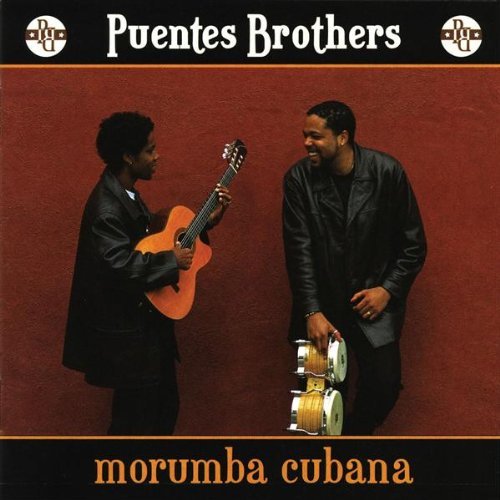
I first came to know Alexis Puentes [aka "Alex Cuba"] via the Puentes Brothers' Morumba Cubana, a rootsy little album of Cuban son that turned up one day at the radio station WXDU around 2004. Canadian emigres, the brothers Alex and Adonis Puentes were doing fun, original material that draws not only on traditional Cuban son, but trova, the native Cuban and Latin American tradition of folk. I seem to recall some American swing mixed in there as well. This album fell into the "pleasant surprise" category.

It wasn't until recently that I realized that Alex and Adonis--now on quite different solo paths, are actually (fraternal) twins. There's enough difference in their look, sound, and personal style that this never hit me as obvious. Naturally, there's a great resonance between them, too.

Adonis blew me away with his shrewdly cynical, yet bumpin' dance tune "Commerciante" on his 2005 solo album Vida. With the coro, "yo no soy músico, soy comerciante (I'm not a musician, I'm a businessman)," the song is both a resignation to, and a protest of, the pressure on artists to produce "hits." Adonis' sound is much more traditionally Cuban, informed by newer dance grooves of timba and salsa but hewing close to the acoustic aesthetic of traditional son. His vocal style reminds me of elegant, jazzy sonero Issac Delgado. Adonis was tapped as a vocalist recently, along with Ruben Blades, for the Lincoln Center free revival concert of Larry Harlow's La Raza Latina: A Salsa Suite.

I would have pegged Alex for the younger brother, because his style, both audio and visual, is much more contemporary and fused with urban and pop fashion. Whereas the cleanshaven Adonis strikes me as a plainspoken craftsmen, Alex, with his trademark fro and arching sideburns, cuts the figure of a flamboyant hipster. Both of them have the songwriting knack and a strong, clear voice. Trova is generally written in a much more personal first-person voice than son, so in a way this is a good starting point for pop fusions, something Alex in his solo career has exploited well.


I really liked Alex's last album, Agua del Pozo, because it congenially strayed from Cuban tradition without falling into a generic Latin pop sound. The new one, self-titled, I've only heard on the website, and while it sounds a little poppier to me than the last one, I can't give it a full review yet. If it's any indication of which direction he's going musically, Alex also helped craft Nelly Furtado's first Spanish-language album, Mi Plan, which also one a Latin Grammy this year.


Alex plays a mean Gibson, and I'm curious to see what the touring band sounds like, and how much of the show will be acoustic vs. electric.


LINKS:

Alex Cuba @ Berkeley Cafe this Tuesday (venue link)

Alex Cuba (artist website)

Wednesday, November 3, 2010

I Got a Filin: Omara Portundo interview & concert FRIDAY

+011 53 7...it was my first time dialing Havana.

Omara Portuondo didn't answer right away. Finally, after about 40 minutes of dialing, a voice picked up:
"Oigo? Omara Portuondo is my name."


Omara's concert at UNC's Memorial Hall THIS FRIDAY (11/5) will be the first by a Cuban artist in the Triangle since Barbarito Torres played the Cat's Cradle in December, 2003.

Here is my extended, edited version of the interview I conducted on October 22, some of which appears in an article in this week's Independent Weekly.

Sylvia Pfeiffenberger: Omara, tell me about your beginnings in music. What were your first music schools, either formal or informal?

Omara Portuondo: I attended normal schools from elementary through high school. Starting in primary school, I belonged to the chorus and took classes in music.

Sylvia: How and when did you arrive in the Filin scene?

Omara: That was in the decade of the 40s, I encountered a group of young people that called themselves “Filin” [>Eng. “feeling”]. Filin means “sentimiento,” and so everything they did in music, they said it had to have “filin.” We began doing boleros and lots of things. The most well-known song they did was called “Contigo en la Distancia,” by composer Cesar Portillo de la Luz. The pianist of the group was Frank Emilio Flynn. Many of these people have already died, because they were older than I was. I was still an adolescent, I was still in high school at that time. But I went to places where you could hear trova, and came to know their music in the houses of friends, etc.

Sylvia: Who gave you the nickname, “La Novia del Filin,” [the Sweetheart of Feeling] and when was that?

Omara: It was the first show I ever did, a program called “El Microfono,” on the radio station Mil Diez. The announcer Manolo Ortega gave me the name “La Novia del Filin,” because I was the only woman in the group at that time.

Sylvia: Among Cuban composers, do you have favorites?

Omara: Almost all of them are my favorites. One of them who has works that are almost classical in nature, but with Cuban roots, is Sindo Garay. I like the writers of traditional trova, and the composers of filin, like Cesar Portillo de la Luz. On the Gracias album, there’s a filin song called “Adios Felicidad” [by Ela O’Farrill]. There are many more I could name.

Sylvia: Is it true what one reads, that North American jazz singers influenced the Filin movement, such as Maxine Sullivan, Lena Horne or others?

Omara: We heard all that music in Cuba, because the southern US is close to Cuba and the Caribbean. We made our own jazz, too, like Frank Emilio, who was an excellent jazzista, but also had a filin ensemble. We also made Brazilian music because we knew it. We made Italian music because we knew it. From Spain we had zarzuelas, all the Spanish music. We had the possibility to know almost all cultures, to have access to them, to know them and to enjoy them.

Sylvia: Was it an international movement then, in terms of its influences?

Omara: The Filin? Filin was a national movement. We sing the same songs now as when I was starting out, boleros, sentimental songs, that’s why it’s called feeling. We were music aficionados. We weren’t very professional in the beginning, but as time went on, we got more professional. We made music everywhere, on the radio stations, everywhere. The radio was a very important means for transmitting the music.

Sylvia: I want to talk a little about your time in the group Cuarteto D’Aida.

Omara: El Cuarteto D’Aida was founded in 1952. There were five musicians, the director, Aida Diestro, and the [vocal] quartet of girls, Elena Burke, Moraima Secada, my sister Haydee Portuondo and me. Aida Diestro was a magnificent musician, complete in every way, she knew how to make great arrangements and select the songs and everything.

Sylvia: Was this also a sort of school for you?

Omara: Yes, that was my university. I was active in the quartet for 15 years, from 1952 until 1967. Then I left to become a soloist.

Sylvia: Let’s talk about your album Magia Negra, at the end of the 50s, that was your first album as a soloist, correct?

Omara: Oh! You know it. While I was still with the quartet I made that record because the musicians suggested it. They wanted to make a record with me, and that’s what we did.

Sylvia: That record has a very interesting sound, a mix of jazz, musica tipica cubana

Omara: Yes, we did a completely Spanish version of “Magia Negra” [“That Old Black Magic”]. Lena Horne sang a song at the time in a film, Stormy Weather. I sang it with Frank Emilio on the radio, in Spanish and English. “Summertime,” all these type of things, I sang these in English and Spanish. At the time several [U.S.] movies came out with all-black casts, another was Carmen [Jones], with Harry Belafonte.

Sylvia: Have you acted in movies?

Omara: Yes, I’ve acted in two films. One is a Cuban opera, it’s a zarzuela, called Cecilia Valdes. They turned it into a movie. There’s a character called Mercedes Ayala running a club where white men could dance with mulatas.

The other film is called Baragua, it’s a city in Cuba where they made peace in the war for Cuban independence. In that one I played the mother of one of the fighters for Cuban independence, Antonio Maceo.

Sylvia: This past November you visited the US to present at the Latin Grammys, and you also won that award [Best Tropical Album for Gracias (2008)].

Omara: That was a very lovely thing that happened to me, and to everyone who worked on the record. We work as a team. We have Brazilian musicians, some from Buena Vista, my son…it was a beautiful project for that reason, because we all worked together, composers, producers, and musicians.

For many years we couldn’t come here [to the U.S.] because Cuba was on a terrorist list. For that time [c. 2004-2009] they didn’t give us visas. But last year, they gave me one. I was able to meet a Mexican composer [at the Latin Grammys] whom I admire greatly.

Sylvia: When was your first visit here? How many times have you toured the U.S.?

Omara: The first visit, it was in 1951, with a show from the Tropicana. There were dancers, musicians, and an orchestra. I haven't counted them [U.S. tours], but that was the first one.

Sylvia: I want to talk some about the Buena Vista phenomenon.

Omara: That was a big hit, also.

Sylvia: Were you expecting it? What importance did it have, as one chapter in your long musical career?

Omara: Well, really, I’m very glad I was incorporated as a part of that very successful record. We toured all over, Europe, Germany, we visited all these places. I was making a filin record at the time, and they came to me and said they wanted me to sing on this record that still didn’t have a name. I sang a duet with Compay [Segundo], “Veinte Años,” which is a song I have been singing for many, many years. It’s a song my parents taught me, a very special one.

Sylvia: To be quite honest with you, that was my introduction to Omara Portuondo, but since that time I’ve been lucky enough to get to know most of your music.

Omara: You don’t say. I give thanks for that, I had no idea someone like you would be interested in getting to know all my music after so many years. In what part of the U.S. do you live?

Sylvia: In North Carolina.

Omara: Well you know we are going to visit you soon.

Sylvia: Yes, we are looking forward to it. I’ve been waiting a long time for the return of Cuban artists.

Omara: Yes, we’re here now. I'm very happy about it because culture has to have its space.

Sylvia: Do I have your correct birthdate, which is October 29, 1930? How do you plan to celebrate your 80th birthday?

Omara: Yes. That day I’ll be [performing] in Chico, California. That’s the best way I could spend it, singing, because I don’t like parties. I don’t drink alchohol. My parties for me are my work, because I get tremendous enjoyment out of it. It gives me energy, it gives me life. I feel very good on stage.

Sylvia: It’s interesting to me that you are a singer with a very refined style, you sing jazz, you have performed on TV and in nightclub shows, but also, you are really a people’s singer, because you sing songs that everyone knows and that everyone sings.

Omara: Yes, of course, that is very important for me too. Because what interests me, what I need as a human being, is to sing things that everyone feels. Love songs, all these sentimental things I’m interpreting, I’m also feeling them at the same time, when I am singing.

Sylvia: Omara, thanks for your time today.

Omara: Muy agradecida.

© by Sylvia Pfeiffenberger 2010. Written permission required to reprint or reproduce.


LINKS:

Nov. 5 Concert Info/ Box Office for Carolina Performing Arts

INDY story: "With Omara Portuondo, Cuba Comes Back to the Triangle"

Omara Portuondo artist website

Monday, October 12, 2009

Back to School

DSC02857.jpg

A high school was the last place I thought I'd be dancing to a live charanga band on Friday night. But that was precisely the scene at Durham Academy's Fiesta Latina last week: Young friends and old going back to Salsa Carolina days, moving and grooving to the sounds of Orquesta Broadway and Los Van Van...I had to pinch myself.

This is what happens when you get one Puerto Rican from El Barrio on your board.

That thought makes Bela Kusin smile. Member and former head of the DA Board of Trustees' Diversity Committee, Kusin started out as just another parent whose son attended Durham Academy. But when the Trustees asked her to join, she was eager add her energy and commitment to the school's diversity initiatives.

"It was because the school was so committed to doing something about diversity that I said yes," Bela recalls.


Charanga Carolina plays a tune dedicated to Puerto Rican youth, as bomba dancers approach the drums.

That "something" turned out to be the Fiesta Latina, a community celebration during Hispanic Heritage Month, now in its fourth year.

"It's our gift to the community," Bela says.

Local talent at the free, public event included Colombian trova singer Juan Carlos Echeverri, folkloric dance groups representing Colombia and Puerto Rico, the UNC Charanga Carolina and members of Mambo Dinamico dance company.


Juan Carlos Echeverri dedicated this song celebrating the vital role of singers in every culture to Argentinean folk icon Mercedes Sosa.

But the sensation of the evening had to be Pavelíd Castañeda, just back from France where he performed a dual harp concert together with his son, Edmar Castaneda.

"I've never heard so much music from a harp," opined one listener from Hillsborough.

Pavelíd's harp became an orchestra for dance standards such as "Moliendo Cafe," earning him a standing ovation. One teacher sitting near me closed her eyes and drifted in the rhythm of "Oye Como Va," a faraway smile on her face.

With the Fiesta Latina growing in participation and success each year, Bela is already thinking ahead to make next year's bigger and better.

"I'm not satisfied. I want to pack the house," she says.

Brava. If education takes a village, count me in.

---
Ed. Note: Bela Kusin was misquoted in an earlier version of this story. Onda Carolina regrets the error.